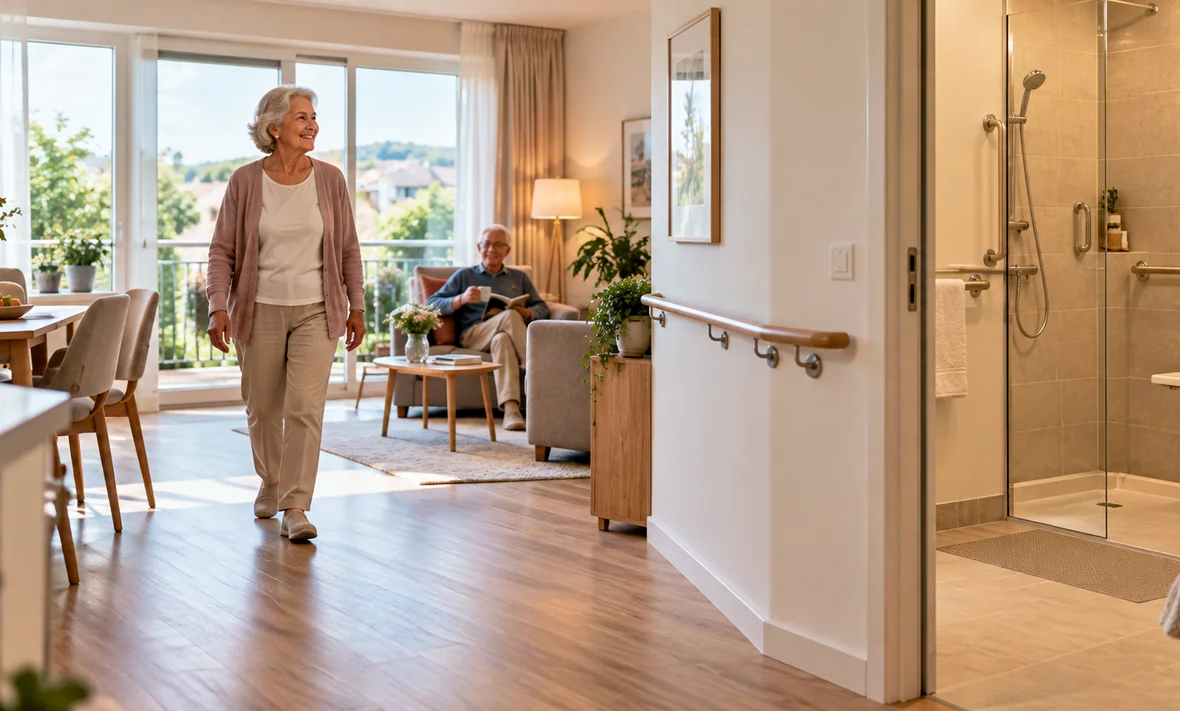
Senior housing on a small island
Aruba is a constituent country of the Kingdom of the Netherlands with around one hundred thousand inhabitants. Its senior care infrastructure reflects that scale: a limited number of homes for older residents, home-care services and a single general hospital serving the whole population.
Most foreign retirees therefore live in condominiums, villas or apartments in residential areas, sometimes within resort-style complexes. Retirement communities with on-site medical staff, common in the United States, are essentially absent, so care is organised individually when needs increase.
Comparing your options
Before choosing a home, think about mobility in the years ahead. Many island houses have outdoor steps, and public transport is limited, so a single-level property near shops and the hospital in Oranjestad offers more flexibility for later life.
| Option | Best for | Support | Watch out for |
|---|---|---|---|
| Condominium in a managed complex | Active couples | Maintenance, security | Association fees, rental rules |
| Villa or bungalow | Retirees wanting privacy | Private staff if hired | Car dependence |
| Long-stay rental | Testing the island | Landlord services | Seasonal pricing |
| Home for the elderly | Dependent residents | Nursing, personal care | Few places, local priority |
Organisations involved in care
Elderly care homes on the island are mostly run by foundations, some with church origins, alongside home-care organisations and private nurses. The Dr. Horacio E. Oduber Hospital provides acute care, and serious cases may be referred abroad, often to Colombia or the Netherlands.
Home-care organisations can provide nursing visits, help with bathing and domestic support, but capacity is finite and waiting periods occur. Many expatriate families therefore employ a private carer directly, which requires respecting local employment and, for foreign carers, work-permit rules.
Residence permit for retirees
Aruba offers a residence permit for retirees who meet minimum age, income or capital criteria and hold health insurance. Applications are handled by the immigration department, DIMAS. Dutch nationals from the European Netherlands follow a separate declaration procedure instead.
Conditions, including how assets and income are assessed, are updated periodically, so rely on the official government portal or a local lawyer. A residence permit for retirees does not allow employment, and continued compliance with the conditions is checked at each renewal.
Healthcare and insurance
Legal residents are generally covered by the national health insurance scheme, AZV, but retirees should confirm in advance whether their permit category gives access or whether private insurance is mandatory. International cover remains important for treatment abroad and medical evacuation.
Primary care through general practitioners is reasonably accessible, and pharmacies are well stocked. Specialist care is more limited, with some disciplines available only through visiting doctors or referral overseas, which is a key consideration for anyone with a chronic condition.
Cost of living and areas
Aruba is not a low-cost destination. Most food and goods are imported, utilities are relatively expensive, and housing prices near beaches are high. Retirees on modest pensions should prepare a detailed budget that includes insurance premiums and possible flights for medical care.
Noord and the Palm Beach area attract many foreigners for restaurants and amenities. Oranjestad offers services and the hospital, Savaneta and Pos Chiquito are quieter, and San Nicolas has a more local feel. The island lies largely outside the main hurricane belt.
Social life revolves around clubs, churches, volunteering and a sizeable community of Dutch, American and Latin American residents. Building friendships early helps later, because informal networks often fill the gap left by the scarcity of organised senior services.
Contract verification
A civil-law notary handles property transfers. Check whether the land is freehold or long-lease government land, as both exist. For condominiums, read the association rules carefully, including restrictions on renting out the unit and the procedure for special assessments.
- Assuming island healthcare can handle every specialist need.
- Overlooking long-lease land conditions when buying a property.
- Underestimating air-conditioning and electricity costs.
- Choosing a hillside house that becomes difficult with reduced mobility.
- Letting health insurance lapse, which can jeopardise residence.
- Hiring a foreign carer without checking work-permit and employment obligations.
- Buying before living through a full year of local prices and routines.
Moving step by step
Practical preparation reduces stress during the permit process. Spending a few months on the island first, ideally outside high season, shows how daily life, prices and community life feel once the holiday atmosphere fades and routines settle.
- Stay several weeks to explore districts and services.
- Confirm eligibility for the retiree residence permit.
- Secure health insurance accepted by the immigration authorities.
- Rent accommodation and submit the residence application.
- Register with a general practitioner and a pharmacy.
Is there assisted living in Aruba?
Formal assisted-living residences on the American model are practically absent. Older people needing help usually remain at home with private carers or enter one of the island’s homes for the elderly, where places are limited and local residents often have priority.
Which languages are spoken?
Papiamento is the everyday language, Dutch is used in administration and law, and English and Spanish are widely understood. English-speaking retirees manage daily life easily, although official letters and legal documents may arrive in Dutch and require translation.
Does Aruba suit retirees with chronic illness?
It can, provided the condition is stable and treatment is available locally or through regular visiting specialists. Discuss your medical file with your doctor beforehand and check precisely which treatments the hospital offers and which would require repeated travel abroad.
Should I check my pension uprating?
Yes. British retirees should ask the International Pension Centre whether annual increases apply to residents of Aruba. Other nationals should verify how their pension fund handles payments to the Caribbean part of the kingdom, including exchange costs and tax treatment.
Sources and organisations
- Gobierno di Aruba – Work and residence for foreign nationals — Government of Aruba portal explaining residence permits for foreign nationals, including the category available to retirees.
- IMI Daily – Aruba Retiree Residence Permit — Profile of the retiree residence permit summarising minimum age, income or asset conditions and the health insurance requirement.