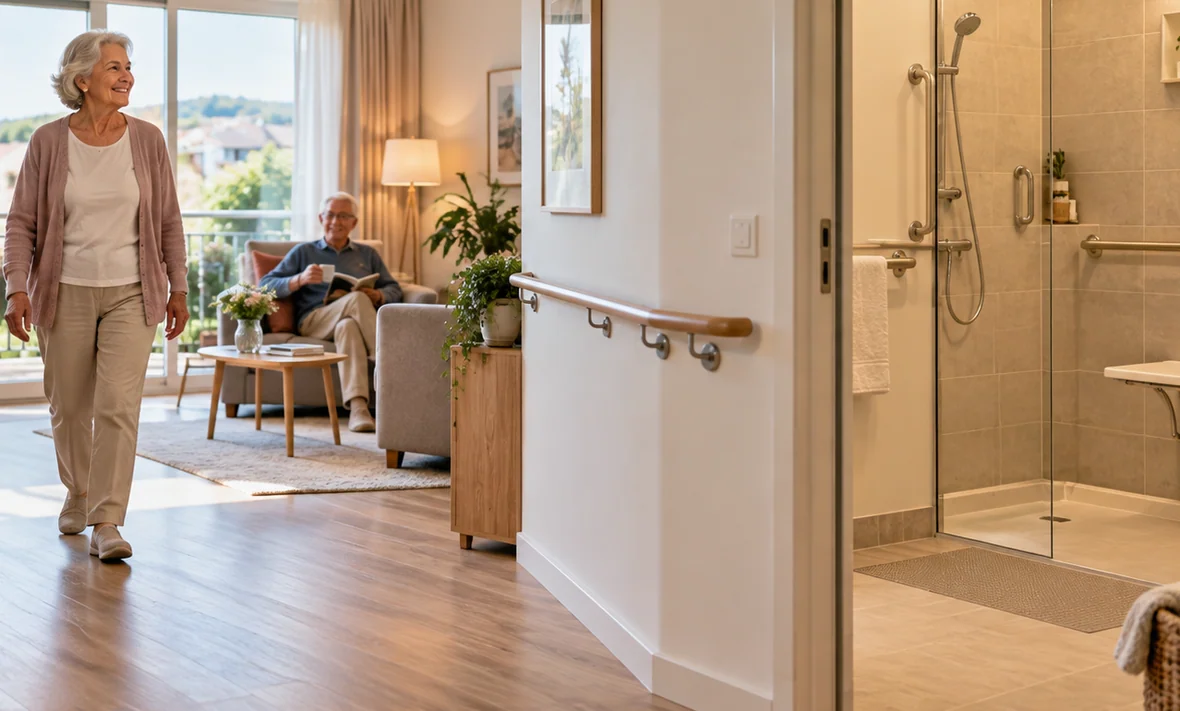
How older people are housed in Oman
In Omani society, older relatives are traditionally cared for within the extended family, often in multi-generational homes. This cultural norm explains why residential care facilities remain few, and why public provision targets mainly people without relatives able to look after them.
Expatriate retirees who stay usually live in rented villas or apartments in Muscat, sometimes in integrated tourism complexes where foreigners may own property. Support at home through domestic workers and private nurses is the most realistic way to manage increasing care needs.
| Arrangement | Typical users | Comments |
|---|---|---|
| Family home with relatives | Omani households | Prevailing cultural model |
| Rented villa or flat with domestic help | Long-term expatriates | Requires a valid residence basis |
| Private home nursing | Expatriates and Omani families | Arranged through clinics or agencies |
| Public care home | Older Omanis without family support | Very limited capacity |
Public and private actors
The Ministry of Social Development oversees social care for older Omanis, including the care home in Rustaq, long described as the main facility of its kind. Recent years have also seen investment in integrated home-based services that help elderly people remain with their families.
Private hospitals and home healthcare companies in Muscat provide nursing visits, physiotherapy and medical equipment. There is no established market of retirement villages or assisted living residences for foreigners, so expectations shaped by Europe or North America should be revised.
Residence after the end of employment
Most expatriate residence permits in Oman are tied to an employer or to a family sponsor, and they generally end when employment does. Oman has no broad retirement visa comparable to schemes in Panama or the Philippines for most foreign nationals.
Alternatives include long-term residence linked to investment or property purchase in designated complexes, under rules introduced in recent years. Conditions and thresholds change, so retirees should confirm current requirements with the Royal Oman Police or an Omani lawyer before planning to remain.
Health services and insurance
Public hospitals serve Omani citizens primarily, while expatriates usually rely on private hospitals and clinics, which are well equipped in Muscat. Comprehensive private health insurance is essential, and older applicants may face higher premiums or exclusions that should be checked in advance.
British retirees should verify whether their State Pension is uprated while living in Oman, and Americans should note that Medicare will not pay for local care. Planning for medical repatriation is prudent for serious conditions requiring long-term specialist treatment.
Living costs, climate and locations
Oman is generally less costly than some neighbouring Gulf states, but housing in desirable Muscat districts and international schools or clinics can be expensive. Domestic help is relatively accessible, though employing a worker involves sponsorship duties and formal contracts.
Summers are extremely hot across most of the country, which can be dangerous for older people with heart or respiratory conditions. Salalah in the south has a cooler monsoon season, and mountain areas offer relief, but medical services there are more limited.
Points to verify before committing
For property in integrated tourism complexes, check exactly which residence rights accompany ownership and whether they extend to a spouse. Read service charge rules, resale conditions and the developer's obligations, preferably with an independent Omani lawyer reviewing all documentation.
When engaging nursing agencies or domestic workers, make sure contracts respect Omani labour rules and specify hours, duties and responsibilities in emergencies. Confirm that your insurance covers home nursing, not only hospital admissions, before relying on such services.
Steps for those planning to stay
Remaining in Oman after retirement requires early planning, ideally while still employed. The following steps help clarify whether a legal and practical basis for staying exists, and what support could be arranged later in life.
- Check when your current residence permit will expire
- Explore investor or property-based residence routes
- Obtain insurance quotes that cover older age
- Assess cooling, accessibility and lifts in your housing
- Identify a private hospital and home nursing provider
- Prepare a fallback plan to relocate if rules change
Pitfalls to keep in mind
Retirees who had lived happily in Oman for decades sometimes discover too late that their status depended entirely on their job. These pitfalls are the ones most worth anticipating when thinking about later life in the Sultanate.
- Assuming residence continues automatically after retirement
- Buying property outside zones open to foreigners
- Relying on public hospitals as a non-citizen
- Ignoring the health effects of extreme summer heat
- Expecting assisted living facilities similar to Western ones
Is there a retirement visa in Oman?
For most foreign nationals there is no standalone retirement visa based solely on pension income or savings. Residence for older expatriates generally depends on investment, property ownership in designated areas or sponsorship by a family member holding valid residence.
Can foreigners use the care home in Rustaq?
The Rustaq facility is a public service intended mainly for Omani citizens who lack family support. Foreign residents should not expect access and will need to arrange any care privately, at home or through private hospitals and nursing agencies in Muscat.
Is Muscat suitable for retirees with mobility problems?
Newer buildings and malls in Muscat are often accessible, with lifts and parking. Pavements, crossings and public transport are much less adapted, so many older residents depend on cars or drivers, which should be factored into daily planning and budgets.
What happens if I need intensive long-term care?
Without residential facilities open to foreigners, intensive care at home with round-the-clock nurses becomes costly and complex to manage. Many expatriates therefore choose to return to their home country or move to a destination with established care homes.
Sources and organisations
- Oman Observer – Soins intégrés pour les personnes âgées — Oman Observer report on integrated care services improving the quality of life of older people across the Sultanate.