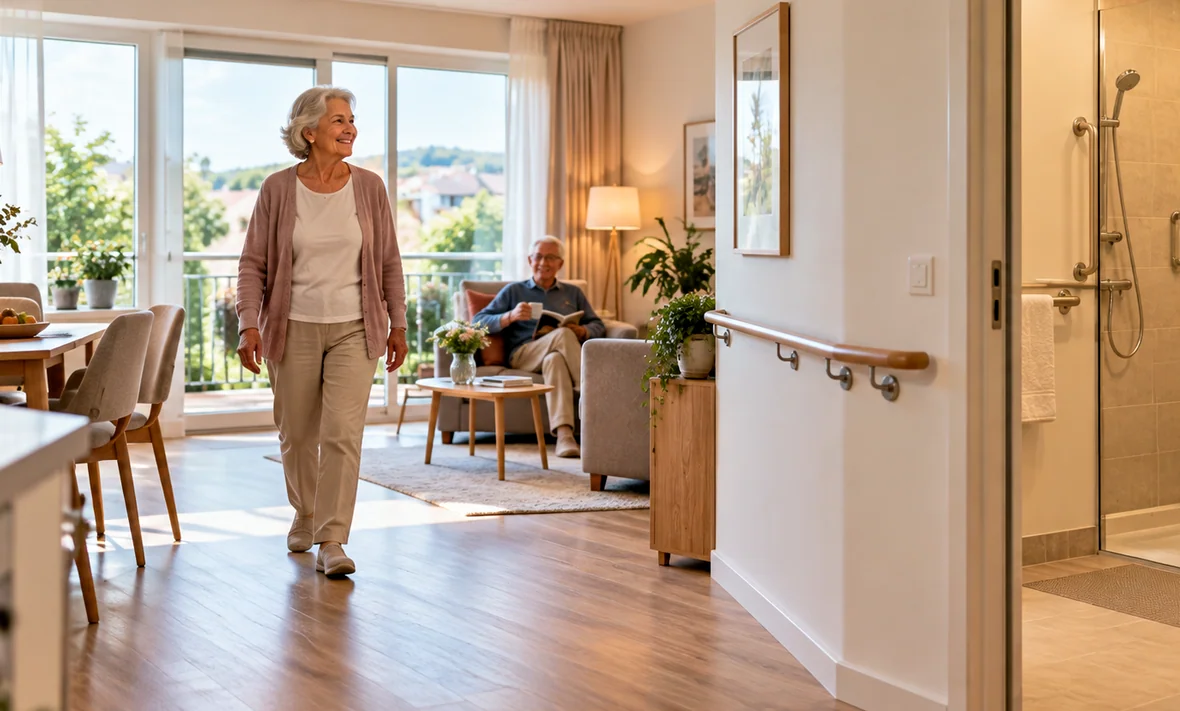
The structure of senior housing in Quebec
Quebec distinguishes private seniors' residences, known by the French acronym RPA, from publicly run long-term care. Every RPA must hold a certificate of compliance issued by the regional health and social services network and appear in the official register, whatever its size.
Public long-term care centres, called CHSLD, receive people with significant loss of autonomy after an assessment by the public network. The province has also developed maisons des aînés, smaller modern units designed to feel more like home, alongside intermediate resources for moderate needs.
From independent apartments to full care
RPA range from apartment buildings with meals and recreation to residences providing personal assistance and nursing care. Their certification category tells families which services are offered. Large operators such as Chartwell run residences in Quebec as well as in other provinces.
| Option | Operator | Services | Access |
|---|---|---|---|
| RPA for autonomous seniors | Private or non-profit | Meals, security, leisure | Private lease, open to anyone lawfully resident |
| RPA with assistance | Private or non-profit | Help with hygiene, medication, some nursing | Private lease and residence contract |
| Intermediate resource | Contracted by public network | Supervised living for moderate needs | Referral by the public network |
| CHSLD or maison des aînés | Public, some private conventioned | Long-term nursing care | Assessment and allocation by the public network |
Leases, rights and costs
Living in an RPA means signing a residential lease governed by the Quebec Civil Code, with a mandatory annex listing services and their prices. Disputes over rent increases or services go to the housing tribunal, which gives tenants meaningful protection against abusive changes.
Residents aged seventy and over may claim a refundable provincial tax credit for home-support services, which covers part of eligible service costs included in RPA rent. In CHSLD the contribution is set by the government according to income and assets.
Can a foreign retiree settle in Quebec
Canada has no dedicated retirement visa. Visitors from many countries may stay for up to six months, and snowbirds use this to spend winters further south. Settling permanently usually requires permanent residence through family sponsorship or another immigration programme.
- Check visitor rules for your nationality on the federal immigration website
- Explore whether a child or grandchild in Canada could sponsor you
- Consider the super visa for parents and grandparents of citizens or residents
- Understand that Quebec runs its own selection for many immigration categories
- Seek advice from a licensed immigration consultant or lawyer
Health insurance through RAMQ
New permanent residents in Quebec must register with the provincial health insurance board, RAMQ, and may face a waiting period before coverage starts. Visitors and super visa holders need private insurance, which becomes expensive with age and pre-existing conditions.
British pensioners should be aware that the UK State Pension has long been frozen for residents of Canada, so it is not uprated each year. Confirm with the Pension Service, and check social security agreements for other countries' pensions.
Regions and climate
Montreal offers bilingual services, major hospitals and an active cultural life. Quebec City is more French-speaking and compact. The Eastern Townships, the Laurentians and the Outaouais near Ottawa attract retirees seeking nature, lakes and quieter towns with RPA options.
Winters are long and very cold, with heavy snow and icy pavements that raise fall risks. Many residences offer indoor corridors, heated parking and organised shopping trips, details that matter much more than in milder retirement destinations.
Housing costs differ markedly between regions. Central Montreal and Quebec City residences are generally more expensive than those in smaller towns, while waiting lists for popular non-profit residences can be long. Visiting several places in winter gives the most honest picture.
Staying at home with public support
Many Quebec seniors remain at home far longer than in Europe thanks to home-support programmes delivered by local health and social services centres, known as CLSC. Nurses, social workers and home-care aides can visit after an assessment of needs and autonomy.
Community organisations add meals on wheels, transport to appointments and friendly visits. For a parent who joins family already living in Quebec, combining these services with a nearby apartment can delay or replace a move into a residence.
Pitfalls before choosing a residence
- Choosing an RPA without checking its current certification in the register
- Underestimating the importance of French outside Montreal
- Ignoring the price list annex and the rules on service changes
- Assuming a visitor can access public health insurance
- Overlooking distance from family and hospitals during winter
Frequently asked questions
Families comparing Quebec residences, as well as people abroad thinking of joining children who already live in the province, often raise the same questions about language, waiting lists, legal status and the realistic cost of public versus private care.
Do I need to speak French in a Quebec residence?
In Montreal and the Outaouais many residences operate in both languages, and some serve mainly English-speaking communities. Elsewhere, daily life and activities take place mostly in French. Ask about bilingual staff, especially for health care and night assistance.
How do I verify that an RPA is certified?
The Quebec health ministry maintains a public register of private seniors' residences, searchable by region and name. Regional health and social services centres can confirm certification status and explain what each category of residence is allowed to provide.
How do people get a place in a CHSLD?
Admission is not purchased privately. A professional from the local health and social services centre assesses autonomy and needs, then the public network proposes a place. Waiting times depend on the region and the urgency of the situation.
Can I keep spending winters abroad while living in an RPA?
Many autonomous residents travel for several weeks. Rent remains payable under the lease, though some services may be suspended by agreement. Permanent residents should also check how long absences from Quebec can last without losing RAMQ coverage.
Sources and organisations
- Éducaloi – Résidences privées pour aînés — Plain-language legal guide to Quebec private seniors’ residences (RPA): certification, lease, services offered and residents’ rights.
- CISSS du Bas-Saint-Laurent – Private seniors’ residences — Official Quebec public health-network page explaining how certified private seniors’ residences work and how to choose one.
- Chartwell Retirement Residences — Overview of Chartwell, one of Canada’s largest retirement-residence operators, with communities in Ontario, Quebec, Alberta and British Columbia.